Choosing among China’s top 10 patio windows manufacturers requires more than comparing catalog prices. Global buyers must examine frame materials, glass specifications, hardware quality, production consistency, and after-sales support. A sliding patio door may look impressive in a showroom, yet its rollers can fail when exposed to coastal air, heavy use, or poor installation.
Building-science expert Joseph Lstiburek has stated, “A window is a hole in the wall.” That simple observation deserves attention. Patio windows must control water, air, heat, noise, and daily movement. Strong manufacturers should provide tested performance data, accurate drawings, sample approvals, and clear installation guidance. Buyers should also ask about thermal breaks, low-emissivity glass, drainage paths, gasket design, and packaging for long-distance transport.
Details matter.
A reliable supplier can explain how a frame performs in a humid apartment, a windy villa, or a sun-facing commercial project. Factory visits, video inspections, and third-party testing can reveal more than polished product photos. Certifications are useful, but they do not replace careful specification or competent installation.
This guide introduces ten Chinese patio windows manufacturers for international buyers. The list considers product range, manufacturing capability, customization, export experience, and communication quality. It is not a perfect ranking. Market information changes, and some companies may fit a project better than a larger, more famous competitor. Buyers should still verify current certificates, lead times, warranty terms, and test reports before signing a contract. A beautiful patio windows system is valuable only when it remains smooth, dry, secure, and efficient after years of use.

A leading Chinese patio window manufacturer starts with consistent engineering, not attractive brochures. Its team studies climate, wall openings, and installation habits in each export market. This experience shapes frame depth, glass selection, drainage paths, and hardware strength. A coastal project may need stronger corrosion resistance. A cold region may demand better thermal insulation.
Reliable manufacturers test more than appearance. They check air leakage, water penetration, wind pressure, opening cycles, and corner strength. Factory inspectors should record results by batch. Clear drawings, material certificates, and installation instructions also matter. Buyers should receive samples that match mass production. Small differences in gasket fit can create serious drafts.
A capable supplier communicates early. Engineers can review shop drawings and explain tolerances in practical language. They also protect finished windows with corner guards, foam, and moisture-resistant packaging. Export experience helps reduce damage during long sea transport. Still, no factory is perfect. A polished sample may hide production weaknesses. Even experienced buyers should inspect random units and question unclear claims. That habit often reveals whether a supplier values durable performance over quick sales. Feedback from installers can improve later batches, although correcting a poor first order is expensive.
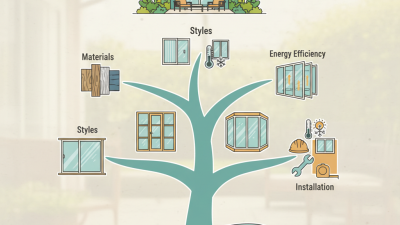
Selecting China’s top patio window manufacturers requires more than comparing catalogues and polished factory photos. We examined production experience, export history, technical documentation, and quality control practices. Factory visits, when available, provided useful evidence: clean assembly areas, labeled glass racks, calibrated testing tools, and documented inspection points.
The review also considered materials and performance. We checked frame options, glass configurations, thermal-break details, drainage design, hardware quality, and weather-sealing methods. Manufacturers were assessed against recognized safety and energy-efficiency requirements in major export markets. Test reports mattered, but their dates, laboratories, and product models were also checked. A certificate alone proves little.
Buyer experience shaped the ranking. We compared response times, drawing accuracy, sample handling, packaging details, lead-time control, and after-sales communication. We asked whether teams could explain installation tolerances, replacement parts, and common site problems in clear language. Pricing was reviewed beside warranty terms and minimum order quantities, not in isolation.
No selection method is perfect. Factory conditions can change after an audit. Some smaller producers may lack polished documentation yet deliver dependable products. That possibility deserves attention. We therefore weighted repeated evidence more heavily than one impressive meeting. The final list reflects practical reliability, technical capability, communication discipline, and suitability for global project requirements. Performance can still vary by order, installer, climate, and maintenance routine.
The manufacturers were evaluated using a standardized, evidence-based framework. The table below describes the selection dimensions, weighting, verification documents, and minimum benchmarks used to identify qualified patio window suppliers for global buyers.
| Evaluation Dimension | Weight | Evidence Reviewed | Selection Benchmark | Maximum Score |
|---|---|---|---|---|
| Product Range and Patio Window Types | 10% | Technical catalog, profile specifications, configuration list | At least two patio window configurations, such as sliding, folding, lift-and-slide, or French-style systems | 10 |
| Quality Management System | 10% | Current quality certificate and certificate-validity record | A valid ISO 9001 certificate covering the relevant manufacturing or assembly scope | 10 |
| Air Tightness Performance | 10% | Independent test report for a representative window system | Testing completed under ASTM E283 or EN 1026, with a declared air-permeability result | 10 |
| Water Penetration Resistance | 10% | Laboratory water-resistance test report and test configuration | Testing completed under ASTM E331 or EN 1027, with the pressure and result clearly stated | 10 |
| Structural and Wind-Load Capability | 10% | Structural test report, design calculations, and maximum panel-size data | Testing under ASTM E330 or EN 12211, with product limitations disclosed before quotation | 10 |
| Thermal Efficiency | 12% | U-value or thermal-transmittance report, glazing specification, spacer details | Whole-window thermal performance calculated or tested under ISO 10077 or an equivalent recognized method | 12 |
| Glass and Product Safety | 10% | Glass certificates, safety-glazing declaration, drawings, and hardware specifications | Safety glazing specified where required, with compliance supported by EN 12150, ANSI Z97.1, or an equivalent standard | 10 |
| Material and Corrosion Durability | 10% | Aluminum or uPVC material data, coating specification, hardware information | Clear material grades and surface-treatment details, plus corrosion testing such as ISO 9227 where applicable | 10 |
| Customization and Project Support | 8% | Shop drawings, color and glazing options, installation guidance, sample process | Ability to provide project-specific drawings, opening dimensions, glazing choices, and installation documentation | 8 |
| Export Readiness and Documentation | 6% | Packing list, commercial invoice template, shipping terms, export references | Documented use of Incoterms® 2020, export packaging controls, and complete technical documentation in English | 6 |
| Warranty and After-Sales Service | 4% | Written warranty, spare-parts policy, complaint procedure, and response commitments | Written warranty terms covering profiles, hardware, glass, and finish, with a defined after-sales contact process | 4 |
| Total Evaluation Weight and Maximum Score | 100% | |||
China’s top ten patio window manufacturers serve different project needs. These profiles focus on production strengths, testing habits, and export readiness. A large aluminum fabricator suits villas and commercial developments. Its strength is stable output and flexible frame sizing. A uPVC specialist offers practical insulation for residential projects. It often provides multi-chamber profiles and reinforced sash structures. A thermally broken system maker targets colder regions. Its products require careful polyamide alignment and reliable corner joints.
A slim-frame manufacturer focuses on wider glass areas and modern views. This design looks attractive but may demand stronger hardware. A coastal supplier develops corrosion-resistant finishes for humid locations. A custom fabricator handles unusual openings, curved walls, and replacement work. A hardware-focused producer improves rollers, locks, seals, and opening balance. Small details matter. A fire-rated project supplier works with tested assemblies and documented installation limits. Another manufacturer specializes in acoustic glazing for urban homes and hotels. Its performance depends on glass thickness, spacer design, and proper sealing. A high-volume factory supports standardized projects with repeatable dimensions.
The final profile represents a quality-led manufacturer with stronger inspection procedures. It may check powder coating, weld points, drainage holes, and glass tolerance. From practical sourcing experience, these differences are more useful than impressive catalogs. Buyers should request test reports, sample corners, packing photos, and production records. Factory visits can reveal storage conditions and assembly discipline. No manufacturer is perfect. Some excellent factories still communicate slowly or overlook small packaging details. That weakness deserves attention before a large order. Reliable cooperation comes from clear drawings, realistic lead times, and inspection checkpoints.
Common nominal opening-width benchmarks for sliding patio-window configurations. These reference dimensions help global buyers compare product capacity and project suitability without displaying individual company or brand data.
Reference sizing is based on common nominal panel widths of approximately 900 mm per sliding panel. Final dimensions depend on the project opening, profile system, glass specification, and local building requirements.
A useful comparison should examine product range, quality systems, certifications, and export support. The leading ten manufacturers typically offer sliding patio windows, folding systems, lift-and-slide doors, and fixed glass units. Common materials include thermally broken aluminum, uPVC, and aluminum-wood composites.
Low-E double glazing suits many climates, while triple glazing improves insulation in colder regions. The U.S. Department of Energy reports that windows can cause 25–30% of residential heating and cooling energy use. Therefore, frame design and glass performance deserve equal attention.
Quality claims need measurable proof. Buyers should request U-value, solar heat gain coefficient, air leakage, water resistance, and wind-load test results. ISO Survey 2023 recorded more than 1.26 million ISO 9001 certificates worldwide, but certification alone cannot prove production consistency.
Factory audits, sample inspections, and batch records remain important. Relevant approvals may include CE, UKCA, NFRC, ASTM, or local building standards, depending on the destination. No single certificate covers every market. That detail is often overlooked.
Tips:
Compare identical specifications, not attractive photos. Ask for complete glass and hardware data. Check whether export teams provide shop drawings, packing lists, installation guidance, and clear Incoterms.
Confirm crate protection with corner guards, moisture barriers, and labeled parts. The World Bank’s logistics research shows that border procedures can strongly affect delivery reliability.
I would also allow time for revisions. Even experienced buyers sometimes approve drawings too quickly, and small dimensional errors become expensive after shipment.
Choosing among leading patio window manufacturers requires more than comparing prices. Start with the product’s actual performance. Check frame materials, glass configuration, drainage design, hardware quality, and thermal ratings. Ask for section drawings and recent test reports. A reliable manufacturer should explain limitations clearly, not only display attractive photos.
Request a sample before placing a large order. Open and close the panels repeatedly. Notice the handle resistance, roller movement, corner joints, and sealing contact. Measure the sample against your approved drawings. Small differences can create installation problems on site. I once accepted a sample without checking the screen track. The final production required costly adjustments. That mistake still influences my inspection checklist.
Factory evaluation also matters. Review production capacity, quality-control records, packaging methods, and export experience. Confirm whether the same team can maintain quality during peak seasons. Ask how they handle damaged glass, color variation, and replacement parts. Independent inspections can verify dimensions, surface finish, and packing strength before shipment. Certifications should match your destination market and product type. Communication deserves equal attention. A capable partner answers technical questions with drawings, evidence, and clear timelines. If responses remain vague, the risk is already visible. Pricing is important, but inconsistent quality can cost far more.