What Are the Top Vinyl Windows for Global Buyers?
For global buyers, choosing vinyl windows is not simply a matter of selecting the lowest quote. The strongest options balance thermal performance, frame durability, glass design, manufacturing consistency, and local installation support. A window that performs well in Toronto may need different glass in Dubai or Singapore. Climate changes the answer. This guide compares leading vinyl windows through measurable specifications and practical ownership concerns. It focuses on evidence, not attractive showroom claims.
We consider U-factor, solar heat gain coefficient, air leakage, water resistance, and visible transmittance. These figures help buyers predict comfort near a cold frame or a sunlit living room. Frame depth, welded corners, drainage paths, and hardware also deserve close inspection. Small details matter. Real projects often reveal weaknesses that brochures omit, especially after repeated seasonal movement. Independent test reports, documented warranties, and responsive distributors provide stronger confidence than broad marketing language. However, certification names and performance requirements differ by market. Buyers should verify the applicable local standards.
Price comparisons require care because shipping, duties, glazing upgrades, installation, and after-sales service can change the final cost. A premium frame may disappoint if installers ignore sill support or perimeter sealing. It is uncomfortable. Likewise, an affordable model may perform reliably when matched with suitable glass and careful installation. There is no universal winner. The recommendations ahead identify strong candidates for different climates, budgets, and project types, while noting trade-offs openly. Some conclusions remain conditional. That honesty helps global buyers choose windows that work beyond the sample room.
Global Vinyl Window Types: PVC Frames, Glazing Options, and Opening Styles
What Are the Top Vinyl Windows for Global Buyers?
PVC frames remain a practical choice for many climates because they resist moisture, corrosion, and routine repainting. Their performance depends on profile design, reinforcement, seals, and installation quality. The U.S. Department of Energy reports that windows can represent 25–30% of residential heating and cooling energy use. That figure makes frame and glazing selection more than an appearance decision.
Double glazing is widely suitable for moderate climates, while triple glazing can reduce heat transfer in colder regions. Low-emissivity coatings help control infrared heat, but solar heat-gain needs vary by location. The National Fenestration Rating Council recommends comparing U-factor, solar heat-gain coefficient, visible transmittance, and air leakage. These values are more useful than vague claims such as “energy saving.” Check the label.
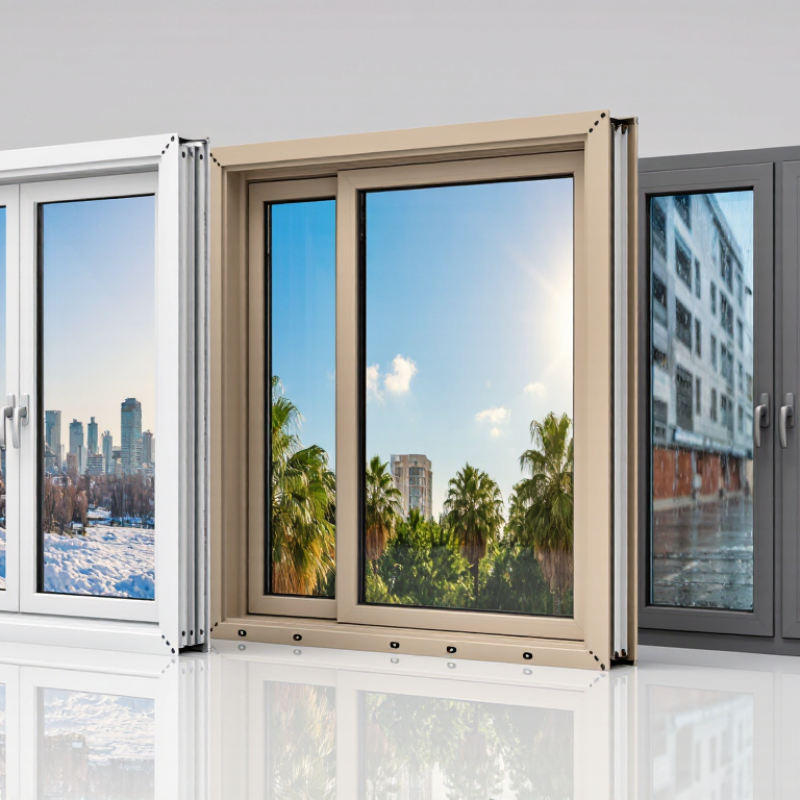
Opening style changes ventilation, cleaning, and weather resistance. Casement windows usually provide strong compression seals and effective airflow. Sliding windows need less interior clearance, but their overlapping tracks may allow more air leakage if poorly maintained. Tilt-and-turn systems offer flexible ventilation, although hardware can increase cost and adjustment needs. Fixed windows often deliver the best insulation, but they cannot provide fresh air.
A common mistake is choosing triple glazing everywhere. It may add weight, cost, and unnecessary solar control. Local climate data, wall orientation, frame reinforcement, and installer experience should guide the decision. ISO 10077-1 offers a recognized method for assessing window thermal performance, yet real buildings can perform differently. Installation still matters.
NFRC Ratings: U-Factor, SHGC, VT, and Air Leakage Performance
Global buyers comparing vinyl windows should read the NFRC label before trusting attractive frame designs. The U-Factor measures heat transfer through the complete window. Lower values usually indicate better insulation. In a cold room, a high U-Factor can mean a chilly glass surface and higher heating demand.
SHGC shows how much solar heat enters through the window. A lower rating may suit hot, sunny regions, while a higher rating can help warm homes in colder climates. VT, or Visible Transmittance, indicates how much daylight passes indoors. Higher VT can brighten a kitchen, but too much sunlight may create glare near a desk. Air Leakage measures how much air passes through the closed window. Lower numbers generally mean fewer drafts.
Look at the whole-window rating, not only the glass specification. Frame design, seals, installation quality, and drainage affect real performance. NFRC data offers a reliable comparison, but local climate conditions still matter. A window tested well in one region may feel less suitable elsewhere. That is easy to overlook. I would also question unusually impressive figures without checking the product size and testing details. Small differences on paper can feel significant beside a cold sofa or a sunlit floor. Pair the label with installer experience, climate data, and realistic room use.
What Are the Top Vinyl Windows for Global Buyers?
Representative NFRC-style performance values for common vinyl window configurations. Lower U-Factor and Air Leakage indicate better insulation and tighter installation; SHGC and VT should be selected according to climate, solar exposure, and daylight requirements.
U-Factor: Btu/h·ft²·°F. SHGC and VT are unitless fractions. Air Leakage: cfm/ft² at 1.57 psf. Values are representative performance targets, not manufacturer or brand data.
Standards Check: ENERGY STAR, AAMA, EN 14351-1, and ISO 10077 Compliance
What Are the Top Vinyl Windows for Global Buyers?
Standards Check: ENERGY STAR, AAMA, EN 14351-1, and ISO 10077 Compliance
For global buyers, vinyl window quality begins with verified performance, not attractive brochures. ENERGY STAR qualification indicates energy efficiency under regional requirements. Its criteria can vary by climate zone and product category. Check the exact certificate and performance values.
AAMA testing commonly covers air leakage, water penetration, structural strength, and operating durability. Ask for reports linked to the same window design, glass package, and hardware. A test using one configuration cannot automatically represent another. Small details matter. Frame width, reinforcement, and installation depth can change results.
EN 14351-1 addresses performance characteristics for windows and external pedestrian doorsets in European markets. It supports documented product performance, but it does not replace careful installation control. ISO 10077 provides methods for calculating thermal transmittance through frames, glazing, and window assemblies. It is a calculation standard, not a universal product approval. This distinction is often missed.
A reliable review compares U-values, solar heat gain, air leakage, and water resistance with local weather conditions. A coastal project needs different priorities from a cold inland home. On site, poor flashing can undermine an excellent test result. That is the uncomfortable part. Standards guide decisions, but workmanship still decides performance. Ask for current reports, test dates, laboratory details, and installation instructions before comparing prices.