
Redispersible Emulsion Powder is a dry polymer material used to improve the performance of cement-based and gypsum-based products. It is commonly added to tile adhesives, exterior insulation systems, repair mortars, self-leveling compounds, and waterproofing blends. When mixed with water, the powder disperses again and forms a polymer film as the material dries. This film can strengthen adhesion, improve flexibility, and reduce cracking under normal movement.
In practical construction work, a well-formulated mortar feels smoother during application and grips substrates more consistently. A tiler may notice fewer edge breaks when pressing adhesive beneath a large tile. A repair worker may see better bonding around a concrete patch. These details matter. Small dosage changes can affect open time, water demand, workability, and final strength. More powder is not always better. The correct grade must match the cement type, aggregate, climate, and application method.
Redispersible Emulsion Powder can also improve abrasion resistance and cohesion in thin layers. However, performance depends on proper mixing, storage, curing, and formulation control. Damp storage may cause unwanted agglomeration. Poor dispersion can create weak spots. Results are not automatic. This is where technical data sheets and controlled trials become important. Experienced manufacturers normally test adhesion, flexibility, water resistance, and drying behavior before approving a product. Even then, field conditions may reveal limitations. A reliable specification should describe both the expected benefits and the situations requiring caution.
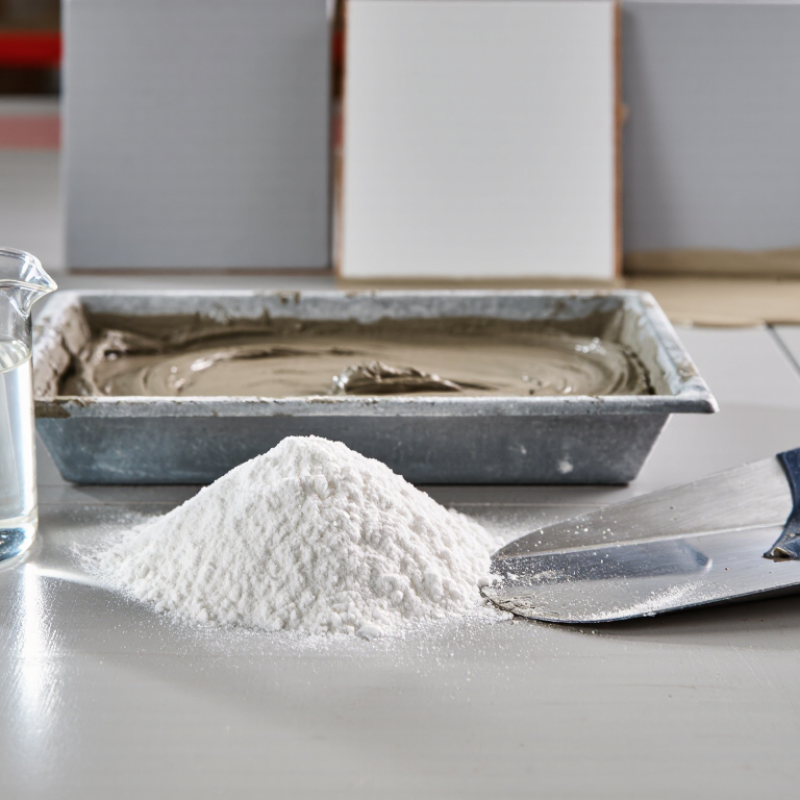
Redispersible emulsion powder is a spray-dried polymer powder used in cement-based and gypsum-based mixtures. It contains polymer particles, protective colloids, and small amounts of mineral or processing additives. When mixed with water, the powder disperses again and forms a flexible polymer film as the mixture dries.
In practical mortar formulation, this powder improves adhesion, flexibility, water resistance, and crack tolerance. It is common in tile adhesives, exterior insulation renders, repair mortars, self-leveling compounds, and waterproofing coatings. A small amount can help mortar grip concrete, ceramic tile, or insulation board more firmly. The material also supports smoother application. Less dust is often noticed during mixing.
Dosage must match the formulation. Too little may produce weak bonding, while too much can reduce workability or raise costs. Water temperature, mixing time, cement type, and drying conditions also affect performance. A laboratory test may look excellent, yet a windy construction site can produce different results. That matters.
Redispersible powder is not a substitute for proper curing or surface preparation. Dusty concrete still needs cleaning. Excess water can weaken the final layer. I have found that simple pull-off tests and small site trials reveal problems earlier than assumptions do. Storage deserves attention too. Keep the bags sealed and dry, because moisture can cause lumps before use.
Redispersible Emulsion Powder: How It Is Made and Reactivated
Redispersible emulsion powder begins as a liquid polymer dispersion. Manufacturers blend polymer particles with protective colloids and performance additives. The mixture is then spray-dried into fine, free-flowing particles. During this step, controlled heat removes water without destroying the polymer structure. Particle size, moisture, and powder flow require routine laboratory testing. Small process changes can affect adhesion and flexibility.
When the powder meets water, its protective ingredients dissolve first. Gentle mixing then separates the polymer particles throughout the liquid. This is reactivation. In a cementitious mixture, hydration continues while the polymer particles move into small pores and surface gaps. As water leaves, the particles join and form a flexible film. That film can improve adhesion, crack resistance, and workability in tile adhesives, repair mortars, and exterior insulation compounds. The result is useful, but not automatic. Poor dispersion may leave soft lumps or uneven performance. Real jobsite conditions often expose weaknesses that laboratory tests miss.
Tips: Add powder gradually while mixing. Use clean water and follow the specified mixing time. Avoid pouring water onto a compact powder mound. Check the mixture for dry pockets and visible clumps. Temperature matters too. Cold water can slow dispersion, while excessive mixing may introduce unwanted air. Store unopened bags in dry conditions, because moisture can start premature bonding. A small trial batch is wise before large-scale application.
Redispersible emulsion powder is a dry polymer additive used in cement-based mortars, tile adhesives, repair compounds, and self-leveling materials. When mixed with water, it redistributes into fine polymer particles. These particles form a flexible film as the mortar dries. The result is stronger adhesion between the mortar and surfaces such as concrete, masonry, or ceramic tile.
Its most noticeable property is improved bonding. A well-formulated mix grips the substrate instead of becoming a loose, dusty layer. The powder also increases flexibility, helping the hardened material tolerate small movements caused by temperature changes or slight substrate shrinkage. Better water retention can keep the mortar workable for longer, especially on porous blocks. This often improves spreading, reduces premature drying, and supports more complete cement hydration. Practical testing still matters. Too little powder may provide limited improvement, while excessive use can affect strength, cost, or setting behavior.
The polymer film can also improve resistance to abrasion, impact, and repeated wetting. In exterior repair mortar, this may help reduce surface cracking after seasonal changes. However, it does not make every formulation waterproof or crack-proof. Mixing speed, powder dosage, cement type, curing conditions, and substrate cleanliness all influence performance. A dusty wall can defeat good chemistry. That detail is easy to overlook. Field workers should check adhesion, open time, flexibility, and water resistance through small trial batches before full production. Some results may look acceptable at first, yet fail after drying cycles or freeze-thaw exposure.
Redispersible emulsion powder is commonly added to cement- and gypsum-based dry-mix products, including tile adhesives, exterior insulation and finish systems, self-leveling underlayments, and repair mortars. It redistributes in water to form a polymer film that improves adhesion, flexibility, cohesion, workability, and resistance to cracking.
Chart key: 1 indicates a commonly targeted functional benefit in the listed application; 0 indicates that the benefit is not usually the primary design objective. Actual performance depends on formulation, dosage, substrates, and curing conditions.
Redispersible emulsion powder is commonly used in dry-mix construction materials. It starts dry. When mixed with water, it forms a polymer dispersion that improves mortar performance. This makes transportation, storage, and site handling more convenient than liquid additives.
Tile adhesives are one of its most familiar applications. The powder can improve adhesion to concrete, cement boards, and masonry surfaces. It also supports flexibility when tiles experience slight movement or temperature changes. Cement-based skim coats, repair mortars, and masonry renders use it to improve cohesion and reduce powdering. On a renovation site, this may help a thin layer remain attached around repaired edges.
It is also used in external insulation systems, self-leveling compounds, and selected waterproofing mortars. In these products, the polymer can improve workability, crack resistance, and water resistance. However, it is not a universal solution. Formulators must match the powder with cement type, fillers, climate, and mixing equipment. Too little may provide limited benefit. Too much can raise cost and alter drying behavior. Small dosage matters. A common mistake is judging performance from a single laboratory test. Real substrates may contain dust, uneven absorption, or old coatings. Practical trials, proper curing, and substrate preparation remain essential. Even a well-designed formulation can underperform when mixed with insufficient water or applied too thickly.
What Is Redispersible Emulsion Powder Used For?
Redispersible emulsion powder is commonly added to dry-mix mortars, tile adhesives, repair compounds, and exterior insulation systems. It improves adhesion, flexibility, cohesion, and resistance to surface cracking after water is added. The powder forms a polymer film during mixing and drying. This film helps cement-based materials bond to concrete, masonry, and insulation boards. Small details matter. A formulation that works on a smooth concrete wall may perform poorly on a porous block.
Selection depends on polymer type, glass transition temperature, protective colloid, and compatibility with cement. A softer polymer can improve flexibility in a thin tile adhesive, while a harder grade may support abrasion resistance in a floor compound. The required water resistance also matters. Consider the substrate, climate, layer thickness, and expected movement before choosing a grade. Laboratory data is useful, but a small site trial often reveals more. Higher dosage is not automatically better.
Performance also depends on storage and mixing practice. Humidity can cause powder agglomeration before use, reducing dispersion quality. Water changes everything. Too little water may leave dry pockets, while excessive water can weaken the hardened layer. Mixing time, shear, temperature, and curing conditions influence film formation. Technicians should compare adhesion, open time, flexibility, and water uptake after realistic curing. Results may vary between batches, and that variation deserves investigation rather than being ignored. A careful adjustment is sometimes better than a dramatic formulation change.
| Application Area | Primary Function | Typical Performance Benefit | Important Selection Considerations |
|---|---|---|---|
| Tile Adhesives | Improves polymer modification, adhesion, flexibility, and wetting of cement-based adhesive mixtures. | Higher bond strength, better deformation tolerance, improved open time, and reduced risk of brittle failure. | Select according to required adhesion class, flexibility, water exposure, substrate type, and curing conditions. |
| External Thermal Insulation Systems | Enhances adhesion and flexibility in basecoats and reinforced mortars applied over insulation boards. | Better resistance to cracking, improved substrate compatibility, and stronger bonding to insulation materials. | Consider low-temperature flexibility, tensile adhesion, impact resistance, water resistance, and compatibility with mesh and insulation boards. |
| Self-Leveling Underlayments | Improves cohesion, substrate adhesion, abrasion resistance, and flexibility of thin flooring layers. | Improved surface integrity, reduced dusting, better resistance to traffic, and enhanced bonding to floor coverings. | Balance polymer dosage with flow, setting time, shrinkage, compressive strength, and compatibility with gypsum or cement binders. |
| Repair Mortars | Increases adhesion and helps accommodate movement between the repair material and the existing substrate. | Improved bond durability, reduced cracking tendency, and greater resistance to abrasion and water penetration. | Check compatibility with the repair substrate, required modulus, shrinkage control, curing environment, and exposure conditions. |
| Waterproofing and Sealing Mortars | Improves film formation, crack-bridging capacity, adhesion, and resistance to water-related degradation. | Better continuity of the cured matrix and improved resistance to intermittent moisture and hydrostatic exposure, when properly formulated. | Select for water resistance, flexibility, hydrolysis resistance, elongation, and compatibility with the mineral binder. |
| Cement-Based Renders and Plasters | Improves workability, adhesion, cohesion, and resistance to surface cracking. | Smoother application, reduced material loss, improved resistance to weathering, and better bond to difficult substrates. | Consider water retention, air entrainment, surface texture, weather exposure, and the required balance between strength and flexibility. |
| Grouts and Joint Fillers | Improves adhesion, cohesion, flexibility, and resistance to abrasion and moisture. | Reduced dusting and cracking, improved edge adhesion, and enhanced durability in service. | Evaluate color stability, shrinkage, water absorption, flexibility, chemical exposure, and ease of cleaning. |
| Factor | How It Influences the Product | Practical Evaluation Indicators |
|---|---|---|
| Polymer Chemistry | Different polymer types provide different balances of flexibility, adhesion, water resistance, thermoplasticity, and weathering resistance. | Review tensile adhesion, elongation, flexibility, water resistance, and compatibility with cement or gypsum. |
| Glass Transition Temperature | A lower glass transition temperature generally supports flexibility at lower temperatures, while a higher value can contribute to hardness and resistance to blocking. | Match the polymer’s flexibility and hardness profile to the application temperature range and movement requirements. |
| Protective Colloid and Additives | Influence redispersion, water demand, rheology, air entrainment, storage stability, and compatibility with other admixtures. | Check dispersibility, foaming tendency, wet-mortar consistency, water retention, and interaction with defoamers or cellulose ethers. |
| Particle Size and Morphology | Affects dissolution or redispersion rate, film formation, surface appearance, and the uniformity of polymer distribution. | Evaluate wetting speed, lump formation, mixing time, film continuity, and the homogeneity of the cured mortar. |
| Dosage Level | Increasing dosage can improve adhesion and flexibility, but excessive polymer may reduce stiffness, alter setting, increase air content, or raise cost. | Optimize through formulation trials rather than assuming that a higher dosage always produces better performance. |
| Mineral Binder and Filler System | Cement type, gypsum, filler grading, and surface area affect water demand, setting, polymer distribution, strength, and shrinkage. | Assess water-to-binder ratio, setting time, compressive strength, tensile adhesion, shrinkage, and workability. |
| Mixing and Application Conditions | Mixing energy, water addition, layer thickness, temperature, humidity, and substrate absorbency influence redispersion and film formation. | Control mixing sequence, mixing time, water content, substrate preparation, application temperature, and curing conditions. |
| Storage and Packaging | Moisture exposure, heat, pressure, and long storage periods can cause caking and reduce handling or redispersion quality. | Store sealed in a cool, dry place; inspect powder flow, caking, moisture content, and dispersion behavior before use. |
| Required Standards and End-Use Conditions | Performance requirements vary with interior or exterior use, wet or dry exposure, movement, traffic, temperature, and applicable construction standards. | Define the target test methods and acceptance criteria for adhesion, flexibility, water resistance, abrasion, open time, and dimensional stability. |
