Choosing the right sliding French doors supplier in China requires more than comparing catalogue prices. A polished showroom photograph cannot reveal roller performance, frame alignment, glass quality, or sealing strength. This guide introduces ten suppliers worth investigating, based on product range, manufacturing experience, customization ability, quality control, and export support.
Fenestration consultant Michael Schober offers a practical reminder: “A beautiful door must still work beautifully every day.” That principle shapes this review. The evaluation considers thermally broken aluminium frames, low-E glass options, multi-point locks, stainless-steel rollers, drainage design, and resistance to wind-driven rain. These details matter when a door opens onto a humid coast, a dusty construction site, or a family room used constantly.
The strongest suppliers should provide technical drawings, sample sections, test documentation, and clear warranty terms. Factory videos help, but independent verification matters more. Ask about production tolerances. Check replacement hardware. Confirm packaging before placing a large order.
No list is flawless. Supplier capabilities can change, and a company strong in bulk projects may not suit a custom villa. Some factories also describe standard hardware as “premium,” which deserves careful questioning. This overview therefore treats the top ten as a practical starting point, not a final verdict. Buyers should compare quotations, inspect samples, and request recent project references before choosing sliding French doors for a specific climate or building design.
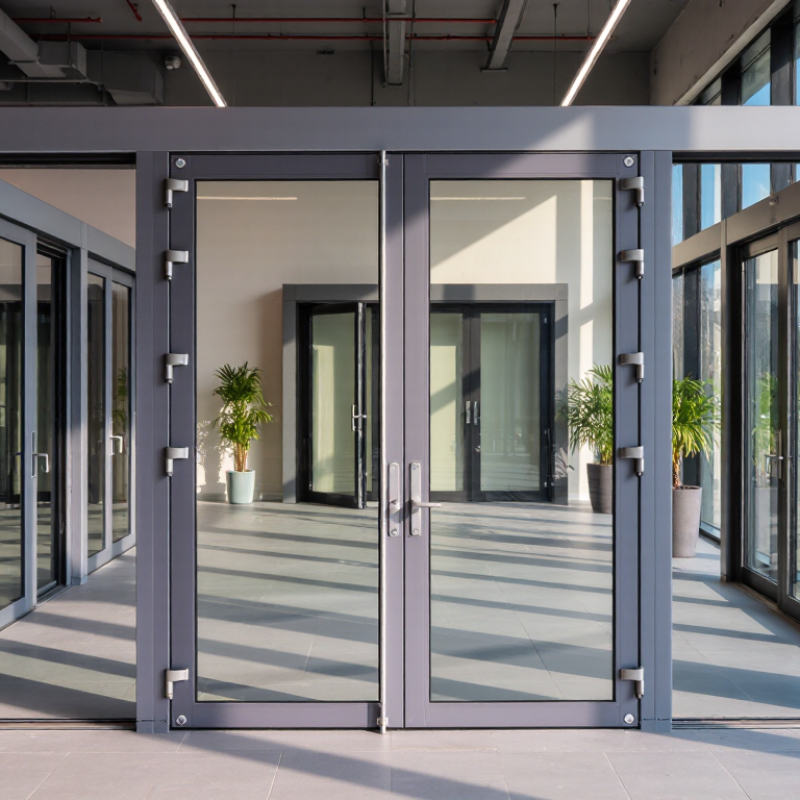
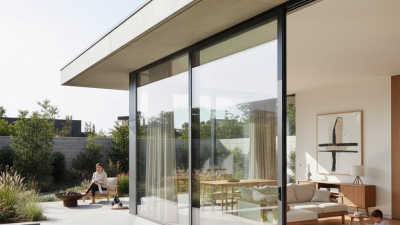
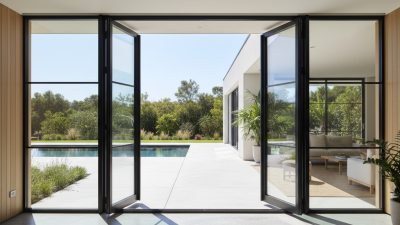
Sliding French doors combine the divided-light appearance of French doors with a smooth horizontal opening. Two or more glazed panels move along concealed or visible tracks. This design can connect a living room with a patio while preserving valuable floor space. Large glass areas bring daylight inside. Narrow meeting stiles can also improve the outdoor view. Details matter most.
Chinese suppliers attract buyers through broad manufacturing capacity, flexible customization, and competitive production costs. Many factories can adjust frame colors, glass thickness, hardware, and opening sizes for different projects. However, price alone is a weak selection method. A dependable supplier should provide material specifications, production samples, factory photos, and independent test reports where available. Ask about air leakage, water resistance, wind-load performance, thermal insulation, and corrosion protection. Confirm that testing matches the destination market’s requirements.
A practical sourcing lesson is simple: never approve doors from drawings alone. A sample may reveal stiff rollers, uneven gaps, or weak locking points. I once underestimated installation tolerances; even a well-made door can perform poorly when the opening is not square. Request packing details, replacement hardware policies, lead times, and clear inspection procedures. Communication can still be imperfect across languages. Written measurements and photographs reduce costly misunderstandings. Reliable cooperation grows through evidence, not promises.
Choosing among China’s top sliding French door suppliers requires more than comparing catalog prices. Start with measurable performance. The International Energy Agency reports that buildings and construction consume about 30% of global final energy and create 26% of energy-related emissions. Therefore, inspect the door’s U-value, air leakage, water resistance, and thermal-break design. Ask for complete test reports, not isolated laboratory figures.
A reliable manufacturer should explain its aluminium alloy grade, glass configuration, roller load rating, and drainage structure. Request a production sample with corner joints, seals, handles, and locking points installed. Review quality records, factory inspection procedures, and batch traceability. ISO 9001 certification can support process control, but it cannot replace independent product testing. Check whether reports match the exact model, dimensions, and glass specification. Small differences matter.
Tips: Compare at least three factories using the same technical brief. Confirm tolerances in writing. Ask how damaged panels are replaced. A good supplier should provide drawings, packaging details, installation guidance, and a clear warranty. Check export experience in climates similar to your project. Coastal sites need stronger corrosion protection. Large openings also require accurate structural calculations. One weakness remains: many evaluations depend on samples alone, while mass production may vary. Conduct a pre-shipment inspection and keep photographic records before payment.
China’s Top 10 Sliding French Door Suppliers by Product Strengths
China’s leading sliding French door suppliers differ more by capability than factory size. This review compares ten supplier profiles across thermal insulation, hardware, customization, and production control. Some focus on slim aluminum frames. Others perform better with large glass panels, lift-slide systems, or coastal-grade finishes. Grand View Research estimated the global sliding door market at about USD 8.45 billion in 2023. Its report also expects steady growth through 2030. This demand favors suppliers with stable export experience and tested components.
The strongest suppliers usually provide thermal-break aluminum, insulated glass, concealed drainage, and adjustable rollers. Several offer low-energy configurations for colder regions. Others specialize in acoustic performance for urban apartments. Product strength should include more than attractive catalog images. Ask for air, water, wind, and cycle-test records. EN 14351-1 and AAMA testing can help verify performance, depending on the target market. Reports from the China National Bureau of Statistics also show continued investment in construction and renovation, but market demand is uneven. A “top ten” ranking is therefore useful, not absolute. Factory capacity can change quickly.
Tips: Request a working sample, not only drawings. Check frame corners, lock alignment, drainage holes, and glass labels. Confirm warranty terms in writing. I have seen impressive samples fail during installation. Site conditions matter. A careful supplier will discuss opening sizes, wind exposure, and local installation skills before quoting. Cost remains important, but the cheapest door may create expensive adjustments later.
| Rank | Anonymous Supplier Profile | Primary Product Strength | Typical Frame Systems | Glazing Options | Typical Door Configuration | Thermal & Weather Performance | Customization Capability | Common Compliance Focus | Typical MOQ | Typical Production Lead Time |
|---|---|---|---|---|---|---|---|---|---|---|
| 1 | Supplier Profile 01 | High-performance residential sliding French door systems | Thermally broken aluminum Powder-coated finishes | Double or triple insulating glass; Low-E and argon-filled options available | Two-, three-, and four-panel configurations with center meeting stiles | Designed for improved air tightness, water resistance, and thermal insulation; project values should be verified by test report | Opening dimensions, panel proportions, colors, screens, handles, and threshold types | Commonly aligned with applicable ASTM, EN, or local building-code requirements | Small project orders may be negotiable; standard production often begins around 10–30 units | Approximately 25–40 days after approved drawings and deposit |
| 2 | Supplier Profile 02 | Large-opening and panoramic door solutions | Aluminum alloy Heavy-duty rollers | Tempered, laminated, Low-E, and oversized insulating glass options | Multi-panel sliding layouts suitable for wide wall openings | Reinforced sash construction supports larger panels; final load and deflection limits require engineering review | Custom panel widths, concealed drainage, low thresholds, corner openings, and integrated insect screens | Structural, safety-glazing, and weather-performance testing commonly available upon request | Generally 10–20 units for customized production | Approximately 30–45 days depending on glass and hardware requirements |
| 3 | Supplier Profile 03 | Cost-efficient doors for residential developments | Standard aluminum profiles Anodized or powder-coated surfaces | Single tempered glass or standard double glazing | Two-panel and four-panel sliding French door designs | Suitable for moderate climates and general residential applications; performance depends on profile and glass selection | Standard sizes, common colors, basic hardware, and optional screens | Basic safety-glazing and dimensional quality checks typically offered | Often 20–50 units for standard configurations | Approximately 20–35 days for standard designs |
| 4 | Supplier Profile 04 | Minimalist narrow-frame designs | Slim aluminum profiles Flush interior lines | Large clear-glass areas with Low-E, laminated, or tinted glass choices | Two-panel sliding French doors with narrow meeting rails | Prioritizes daylight and visual openness; thermal performance varies by profile depth and glazing specification | Custom sightlines, recessed tracks, flush sills, colors, and handle finishes | Air, water, wind-load, and safety-glass documentation may be available for project orders | Usually 10–30 units | Approximately 30–45 days |
| 5 | Supplier Profile 05 | Energy-conscious doors for cooler climates | Thermally broken aluminum Insulated frame chambers | Double or triple glazing with Low-E coating, warm-edge spacer, and argon option | Two- and four-panel configurations with insulated panels | Configured to reduce heat transfer and condensation risk; whole-door U-value must be confirmed for each design | Glass thickness, spacer type, thermal breaks, frame depth, and threshold options | Energy-performance calculations and project-specific test documentation may be requested | Commonly 10–20 units | Approximately 35–50 days, depending on glass availability |
| 6 | Supplier Profile 06 | Coastal and high-humidity applications | Corrosion-resistant aluminum Durable powder coating | Tempered or laminated insulating glass; solar-control glass available | Two-, three-, and four-panel systems with corrosion-resistant hardware options | Focuses on drainage design, coating durability, seal performance, and resistance to humid environments | Marine-grade finish options, enhanced seals, stainless-steel components, and custom colors | Coating, salt-spray, safety-glazing, and weather-performance documentation may be available | Usually 10–30 units | Approximately 30–45 days |
| 7 | Supplier Profile 07 | Traditional French-door appearance with sliding operation | Aluminum frame Decorative grille options | Clear, Low-E, laminated, or decorative divided-lite glass | Sliding panels with simulated divided lites or integrated decorative bars | Balances traditional appearance with modern sliding hardware and weather seals | Grille patterns, panel layouts, heritage colors, hardware styles, and custom dimensions | Safety-glazing and general weather-performance requirements can be specified by market | Often 10–25 units | Approximately 25–40 days |
| 8 | Supplier Profile 08 | Project-based doors for villas and hospitality developments | Heavy-duty aluminum Commercial-grade rollers | Large-format tempered, laminated, or insulated glass packages | Multi-panel systems, fixed-plus-sliding combinations, and corner arrangements | Suitable for coordinated project openings; structural calculations and site conditions should be reviewed before ordering | Shop drawings, elevation schedules, coordinated hardware, screens, and installation accessories | Project-specific structural, wind-load, water, air, and safety requirements | Commonly 20–50 units per project | Approximately 35–60 days after technical approval |
| 9 | Supplier Profile 09 | OEM and private-label manufacturing flexibility | Multiple aluminum profile depths Flexible hardware packages | Single, double, laminated, tempered, and Low-E glazing options | Standard and customized sliding French door formats | Performance can be configured according to target market, budget, and project specification | Packaging, labels, drawings, colors, accessories, dimensions, and hardware combinations | Documentation is generally prepared according to destination-market requirements | Often 20–50 units for customized OEM orders | Approximately 30–50 days, excluding sample approval |
| 10 | Supplier Profile 10 | Replacement and renovation door solutions | Retrofit-friendly aluminum Low-threshold options | Double glazing, laminated safety glass, and solar-control options | Compact two-panel sliding French door layouts for renovation projects | Designed for easier replacement and improved sealing; existing opening conditions must be measured accurately | Retrofit dimensions, sill heights, frame colors, screens, locks, and interior trim options | Safety-glazing, dimensional accuracy, installation guidance, and local code compliance | Small batches may be available, commonly from 5–20 units | Approximately 20–35 days for standard retrofit specifications |
When comparing China’s top 10 sliding French door suppliers, certifications should be verified, not simply listed. Request current ISO 9001 records, product test reports, and market-specific compliance documents. CE marking may apply for certain export markets, while energy, glass, and fire requirements depend on the project location. Check the certificate holder, testing laboratory, issue date, and matching product model. A polished PDF is not enough.
Materials reveal more about long-term performance. Thermally broken aluminum frames suit modern façades and resist moisture when properly finished. uPVC can offer strong insulation with lower maintenance. Wood-aluminum systems provide warmth indoors, but they demand careful sealing. Choose tempered or laminated glass, stainless-steel rollers, reinforced locks, and drainage channels. Ask about air leakage, water penetration, wind resistance, and cycle testing. Real samples matter.
Tips: Compare the same specifications across all ten suppliers. Request a corner sample, hardware details, color swatches, and installation drawings. Confirm maximum panel weight and opening size before approving customization. Suppliers may offer dozens of colors, grille patterns, glass types, screens, thresholds, and handle finishes. However, customization can increase lead time and create replacement difficulties. One detail is often missed: verify whether replacement rollers and seals remain available after delivery. Factory audits and video inspections improve confidence, though they cannot replace independent testing. No supplier is perfect. Your comparison sheet should record weaknesses, not hide them.
China Top 10 Sliding French Doors Suppliers: How to Select and Purchase the Right Chinese Supplier for Your Project
Choosing among China’s leading sliding French door suppliers requires more than comparing quotations. The U.S. Department of Energy reports that windows can cause 25–30% of residential heating and cooling energy use. Therefore, request verified U-values, air-leakage results, glass specifications, and thermal-break details. Do not trust attractive catalog images alone. Ask for recent test reports linked to the exact profile, glass, and hardware configuration.
A reliable supplier should explain production capacity, quality inspections, packaging methods, and replacement procedures clearly. Review factory certifications, export experience, and sample consistency. ISO 9001 certification can support process control, but it does not guarantee product performance. Inspect a sample door physically. Check corner joints, rollers, drainage holes, locking points, and frame tolerances. Small defects become expensive after installation.
The International Energy Agency’s 2024 Global Status Report for Buildings and Construction states that buildings consume about 30% of global final energy. This makes glazing performance commercially important, especially for hotels and residential developments. Compare at least three suppliers using the same technical schedule. Confirm minimum order quantity, lead time, Incoterms, spare parts, and warranty response times. A low price may hide weaker glass or thinner aluminum. I would also include an independent pre-shipment inspection. It adds cost, but skipping it can be the costlier mistake. Suppliers sometimes promise faster delivery than their production records support. Ask for evidence.
Use this non-branded evaluation framework to compare potential Chinese suppliers. The recommended weights prioritize measurable product performance, compliance, manufacturing capability, and total purchasing risk rather than supplier popularity alone.
How to use it: Ask each supplier for test reports, drawings, certifications, sample approvals, production photos, lead-time commitments, warranty terms, and a complete landed-cost quotation. Score every supplier against the same criteria before selecting the best fit for your project.