China Top Flag Pole Manufacturers How to Choose?
Choosing among China’s top flag pole manufacturers requires more than comparing prices and polished product photos. A Flag Pole must match its location, climate, height, display purpose, and installation conditions. Coastal projects may need marine-grade stainless steel, while inland sites often use coated aluminum or galvanized steel. The right choice begins with practical questions. What wind load can the pole withstand? How will the foundation handle heavy rain or frozen soil? Can the manufacturer provide drawings, material details, surface treatment information, and installation guidance?
Experienced buyers usually examine the factory behind the catalog. Request production photos, sample orders, quality inspection records, and references from similar projects. A dependable manufacturer should explain wall thickness, pole sections, lifting systems, hardware, packaging, and replacement support in clear language. Independent testing or recognized quality systems can add confidence, but certificates alone do not prove consistent workmanship. Factory communication matters too. Delayed replies may become costly during installation. We learned this the hard way on projects where a small fitting mismatch caused unnecessary site delays.
Price still matters, naturally. However, the cheapest quote may exclude freight protection, foundation bolts, or weather-resistant finishing. That detail can change the real project cost. No supplier is perfect, and every specification deserves a second look. Ask for a written quotation with tolerances, delivery terms, warranty coverage, and inspection responsibilities. A thoughtful comparison helps importers, contractors, schools, businesses, and public facilities select a China-based Flag Pole manufacturer with stronger technical credibility and more dependable long-term value.
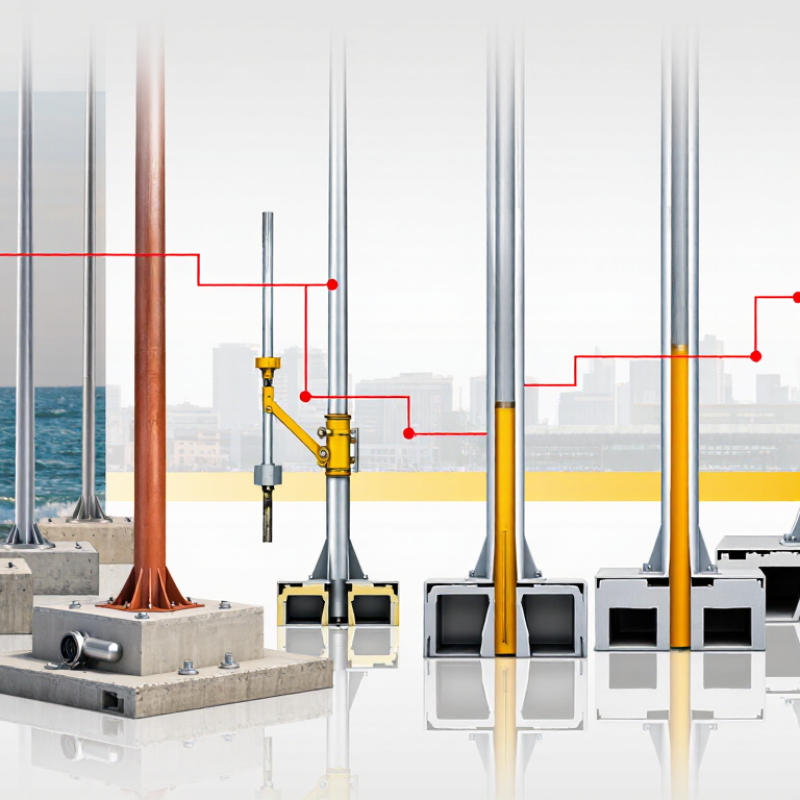
What Are China’s Top Flag Pole Manufacturers?
China’s top flag pole manufacturers are usually defined by capability, not advertising. Experienced factories often produce aluminum, stainless steel, and fiberglass poles for schools, commercial sites, sports grounds, and public spaces. They understand wind loads, wall thickness, surface treatment, and installation conditions. A reliable supplier should explain these choices clearly.
The strongest manufacturers control several steps in-house. Look for cutting, welding, polishing, powder coating, and final inspection under one system. Ask for material certificates, dimensional reports, and loading test records. Factory visits can reveal practical details, such as organized storage, calibrated tools, and protective packaging. Small details matter. A scratched finish can become a serious maintenance problem after installation.
Top manufacturers also adapt designs to real projects. They may offer tapered poles, sectional poles, internal halyard systems, base plates, and custom heights. Check whether engineers review foundation drawings before production. Communication quality matters too, especially when translating wind data and site measurements. Some factories present impressive samples but provide weak follow-up support. That deserves caution. No manufacturer gets every detail right, and buyers should question unclear tolerances, vague delivery dates, or unusually low quotations. Careful comparison often reveals the more dependable partner.
Which Types of Flag Poles Do Chinese Manufacturers Produce?
China’s top flag pole manufacturers produce several types for homes, schools, commercial sites, and public spaces.
Aluminum poles are popular because they are light, corrosion-resistant, and easy to install. Their smooth powder-coated surfaces suit entrances and landscaped areas.
Steel flag poles provide greater rigidity for taller installations and exposed locations. Galvanized steel resists moisture, while stainless steel offers a cleaner appearance near coastal buildings.
Fiberglass poles are another option. They are lightweight, flexible, and useful where electrical conductivity is a concern. However, color fading and surface damage require careful inspection.
Manufacturers also produce sectional, telescopic, rotating, and internal-rope flag poles.
Sectional poles simplify transport because long shafts arrive in separate pieces. Telescopic models can be lowered without climbing equipment.
Rotating designs help prevent flags from wrapping around the shaft. Internal-rope systems protect the halyard and create a neater appearance. Small portable poles may include weighted bases for exhibitions or temporary events.
Material is only one decision.
Check wall thickness, base-plate strength, hinge quality, drainage, and wind-load data. A bright finish can look impressive. It may not prove outdoor durability. Ask for coating records, dimensional drawings, installation instructions, and inspection reports.
In practical projects, matching pole height to the site often matters more than choosing the thickest material. I have seen oversized poles create unnecessary foundation costs. A smaller, properly engineered pole can perform better. Mistakes happen when appearance leads the selection.
What Certifications and Customization Options Should You Check?
Choosing among China’s top flag pole manufacturers requires more than comparing prices and photographs. Certification records deserve close attention. The ISO Survey 2022 reported 1,265,216 ISO 9001 certificates worldwide, showing how widely quality systems are used. However, ISO 9001 confirms process control, not structural performance. Ask for current factory certificates, material traceability, welding procedures, and inspection reports.
For outdoor poles, request wind-load calculations based on the installation site. ASCE 7-22 and EN 1991-1-4 provide recognized methods for evaluating wind actions, but local requirements may differ. Check whether aluminum or steel certificates identify grade, thickness, and corrosion protection. Coating evidence should include adhesion and salt-spray testing. A certificate without batch numbers is weak evidence. I have seen attractive samples fail because the anchoring details were vague.
Customization should cover height, tapered geometry, wall thickness, halyard type, base design, finish, and lighting provisions. Confirm the flag size and expected wind exposure before approving dimensions. Internal halyards look cleaner, while external systems simplify maintenance. Ask for production drawings, foundation loads, packaging details, and a sample approval process. The 2023 Global Wind Report recorded continuing growth in installed wind capacity, reminding buyers that exposed sites face demanding conditions. Yet wind statistics alone cannot replace engineering review. Some specifications remain unclear, and that is a reason to pause, not guess.
How to Compare Prices, Services, and Export Capabilities Before Choosing
Choosing among China’s top flag pole manufacturers requires more than comparing the lowest quotation. Ask for a clear bill of materials, including pole alloy, wall thickness, coating, base plate, fasteners, and packing method. A cheaper pole may use thinner steel or exclude corrosion protection. World Bank Commodity Markets Outlook data shows that metal prices can change sharply, so every quotation should include a validity period and adjustment terms. Do not ignore small details.
Service quality is easier to test through evidence. Request production drawings, load calculations, inspection records, and photographs from completed installations. Check whether the supplier offers replacement parts, installation guidance, and a realistic response time. A useful comparison sheet can score warranty coverage, testing procedures, communication speed, and complaint handling. Price matters, but service failure creates larger costs at the project site.
Export capability deserves separate verification. UNCTAD’s Review of Maritime Transport reports that over 80% of global merchandise trade by volume moves by sea. Packaging, container loading, moisture protection, and document accuracy therefore affect delivery risk. The World Bank Logistics Performance Index 2023 covers 139 economies on a 1–5 scale, including customs, infrastructure, and timeliness. Ask suppliers for recent export references, shipping terms, carton dimensions, and sample commercial documents. Incoterms should be stated clearly, because “shipping included” is not precise enough. I would also compare landed cost, not factory price alone. Some quotes look attractive until port charges appear. That mistake is common.