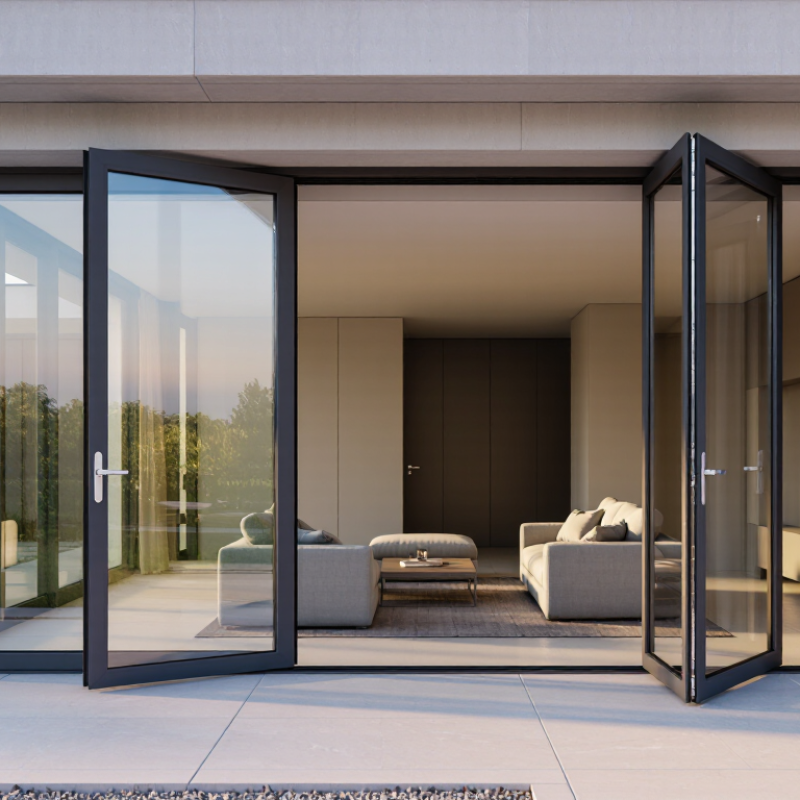
China Top Sliding Glass Doors Manufacturers for Global Buyers

China has become a significant sourcing base for sliding glass doors, serving residential, hospitality, commercial, and architectural projects worldwide. Its manufacturers offer varied systems, including lift-and-slide, multi-panel, thermal-break, and minimal-frame designs. Yet attractive catalog images are not enough. Global buyers need evidence of performance, production consistency, and after-sales support.

Fenestration consultant Greg Larson once noted, “Performance is the product, not an accessory.” This principle matters when evaluating Chinese suppliers. A reliable factory should explain glass composition, aluminum alloy, hardware ratings, drainage design, wind-load testing, and thermal performance. Buyers should also request factory audit records, project references, sample approvals, and clear inspection procedures. Small details matter. A stiff handle can signal poor assembly. Uneven rollers may become expensive site problems.

This guide examines leading China sliding glass doors manufacturers through practical buying criteria. It considers customization, engineering capability, quality control, packaging, export experience, and communication speed. It also looks beyond marketing claims. Can the supplier reproduce the approved color? Can replacement rollers arrive quickly? Does the packaging protect glass edges during a long sea voyage?

The answers may vary between factories. That is uncomfortable, but useful. No manufacturer is perfect for every project. Some excel at large openings, while others perform better with standard residential sizes. Buyers should match factory strengths with local climate, building requirements, installation skills, and project budgets. The goal is not simply to find the lowest quotation. It is to find a dependable partner for safe, durable, and attractive sliding glass doors.

China Top Sliding Glass Doors Manufacturers for Global Buyers

China’s Top Sliding Glass Door Manufacturers: Market Scope and Key Data

China Top Sliding Glass Doors Manufacturers for Global Buyers

China’s Top Sliding Glass Door Manufacturers: Market Scope and Key Data

China’s sliding glass door manufacturing market serves residential, hospitality, retail, and light commercial projects worldwide. Production clusters are strong in Guangdong, Zhejiang, Jiangsu, and Shandong. Supplier directories and trade records show hundreds of active manufacturers and trading companies. Export capability varies widely. Some factories handle 20,000 units monthly, while others depend on subcontracted machining. This difference affects consistency, delivery, and after-sales support.

For global buyers, the practical market scope includes thermally broken aluminum frames, laminated or tempered glass, lift-and-slide systems, and customized finishes. Common project orders range from 50 to 500 units. Standard lead times are often 25 to 45 days after approved drawings. Complex hardware or oversized panels can add two weeks. A serious supplier should provide glass thickness, wind-load calculations, watertightness results, and hardware cycle data. Testing should match destination standards.

In factory evaluations, I would inspect corner joints, drainage paths, roller adjustment, and protective film adhesion. Small defects become expensive after installation. Quality systems such as ISO 9001 can support process control, but certification alone proves little. Independent inspections remain useful before shipment. Buyers should compare landed cost, not only the quoted unit price. Freight, crating, duties, installation tolerances, and warranty response can change the final figure. Market data is not perfectly transparent. Some published capacity numbers need careful verification.

China’s Top Sliding Glass Door Manufacturers: Market Scope and Key Data

Data Dimension Key Metric Verified Data or Benchmark Relevance to Global Buyers Reference Basis
Global building demand Share of global final energy consumption Buildings account for approximately 30% of global final energy consumption. Thermal performance, solar control and airtightness are major purchasing criteria for large projects. International Energy Agency, global buildings sector data
Building-related emissions Energy-related CO₂ emissions Buildings and construction represent approximately 26% of global energy-related CO₂ emissions. Supports demand for low-U-value glazing, insulated frames and whole-door energy documentation. International Energy Agency, global buildings sector data
Common residential door height Nominal door height 80 in, equal to approximately 2,032 mm, is a widely used residential reference dimension in North America. Useful for initial quotation, opening preparation and container planning. 2021 International Residential Code, door-size provisions
Accessible clear opening Minimum clear width 32 in, or approximately 815 mm, for an accessible door opening measured with the door open 90 degrees. Affects panel width, handle position, opening layout and project compliance. 2010 ADA Standards for Accessible Design, Section 404.2.3
Safety glazing Impact-safety requirement Glazing in hazardous locations generally requires safety glazing complying with applicable regional building regulations. Sliding door panels are frequently located in impact-prone areas and require documented glass safety compliance. International Building Code and 16 CFR 1201 safety-glazing requirements
Tempered glass Heat-treated safety glass Fully tempered architectural glass is commonly specified for doors; performance must be confirmed against the selected regional standard. Reduces injury risk from breakage and supports compliance in residential and commercial applications. ASTM C1048 and EN 12150-1
Insulating glass units Sealed glazing construction Double-glazed units use two panes separated by a sealed cavity; cavity width, gas fill and coatings must be specified in the purchase order. Helps buyers compare energy performance, condensation resistance and regional climate suitability. EN 1279 insulating-glass-unit series
Thermal performance U-value reporting U-value should be reported for the complete door assembly, including glass, frame, spacer and edge conditions—not glass alone. Enables fair comparison between quotations and supports local energy-code submissions. ISO 10077-1 and ISO 10077-2
Air leakage Test method Air leakage is evaluated by pressure testing through the complete door assembly rather than by visual inspection alone. Important for comfort, heating and cooling costs, dust control and high-rise applications. ASTM E283 and EN 1026
Water penetration Weather-resistance test Water-resistance performance depends on the tested pressure level, drainage design, sill detail and installation method. Essential for coastal, tropical, monsoon and high-wind regions. ASTM E331 and EN 1027
Structural performance Uniform-load testing Structural testing evaluates deflection, permanent deformation and damage under specified positive and negative pressures. Allows buyers to match the door system to wind exposure, building height and local engineering requirements. ASTM E330/E330M and EN 12211
Corrosion environment Exposure classification Coastal and industrial locations require a finish and hardware package selected for the expected corrosivity category. Helps define aluminum coating, stainless-steel grade, rollers, fasteners and maintenance requirements. ISO 12944-2 environmental corrosivity categories
Acoustic performance Sound insulation rating Sound-reduction performance must be based on laboratory testing of the complete door assembly and its installation details. Relevant for apartments, hotels, offices and buildings near transport corridors. ISO 10140 and ASTM E90
Operating-cycle durability Hardware endurance Cycle-life requirements vary by product class and market; buyers should request the tested cycle count for rollers, locks and handles. Provides a more reliable comparison for high-traffic commercial and hospitality projects. EN 1191 and applicable regional door-hardware standards
Export documentation Core technical file A complete export file should include approved drawings, glass specification, hardware list, packing details, test reports and installation instructions. Reduces approval delays, installation errors, claims and customs-related document gaps. International construction procurement practice
Recommended buyer comparison Bid-evaluation fields Compare complete-door U-value, air and water test results, structural pressure, glass safety class, hardware grade, warranty terms and packing method. Creates a consistent, non-brand-based procurement scorecard for international sourcing. Compiled from the standards and market indicators listed above

Note: Performance values for a specific sliding glass door must be confirmed from project-specific laboratory reports, approved drawings and the building regulations of the destination market.

Comparing 6063-T5 Aluminum, 6–12 mm Glass, and Thermal-Break Systems

China Top Sliding Glass Doors Manufacturers for Global Buyers

For global buyers, sliding door performance starts with the aluminum and glass specification. 6063-T5 aluminum offers good corrosion resistance, clean extrusion lines, and practical strength for residential and commercial frames. However, alloy alone does not guarantee durability. Extrusion tolerance, corner joints, surface treatment, and roller quality also affect daily operation. A narrow frame may look elegant, yet it can flex under heavy glass.

Glass thickness usually ranges from 6 to 12 mm. Six-millimeter glass suits lighter interior applications, while 10 or 12 mm glass can provide better impact resistance and a more solid closing feel. The correct choice depends on panel size, wind exposure, safety requirements, and hardware capacity. Thicker is not always better. It adds weight, cost, and installation pressure.

Tips: Request mill certificates, glass test reports, and section drawings before ordering. Confirm whether the glass is tempered or laminated. Check the thermal-break polyamide width, gasket material, drainage design, and roller load rating. Thermal-break systems reduce heat transfer by separating interior and exterior aluminum sections. They can improve comfort, but weak seals may cancel much of that benefit. In my project reviews, suppliers sometimes highlight the profile while overlooking installation quality. That mistake is easy to repeat. Ask for mock-up testing, especially when doors will face strong sunlight, rain, or frequent use.

Quality Standards: EN 12150, EN 14351-1, ASTM, and CE Compliance

China Top Sliding Glass Doors Manufacturers for Global Buyers

For global buyers, compliance should begin with the glass, frame, and complete door assembly. EN 12150 defines requirements for thermally toughened safety glass, including fragmentation and mechanical performance. A door may look flawless. It can still fail if the glass batch, thickness, or heat-soaking records are unclear.

EN 14351-1 addresses windows and external pedestrian doorsets, covering air permeability, watertightness, wind resistance, and thermal performance. Ask for complete assembly test reports, not only glass certificates. ASTM methods such as E283, E331, and E330 help verify air leakage, water penetration, and structural pressure in North American projects.

According to the U.S. Department of Energy, windows account for about 25–30% of residential heating and cooling energy use . Poorly sealed sliding doors can increase that burden.

CE marking indicates conformity with applicable European requirements; it is not a quality award by itself. Buyers should review the Declaration of Performance, factory production controls, and traceable inspection records. Reports from the European Commission on construction-product compliance repeatedly emphasize documented performance and market surveillance.

The details matter: roller alignment, drainage holes, gasket compression, and a 2–3 millimeter installation tolerance can affect daily operation. Test carefully. Certificates can be current while production changes quietly. That risk deserves honest checking, especially when specifications are translated across languages.

Buyer Metrics: U-Factor, SHGC, Air Leakage, Water Tightness, and Wind Load

China Top Sliding Glass Doors Manufacturers for Global Buyers

For global buyers, sliding glass doors should be compared through tested performance, not appearance alone. The U.S. Department of Energy reports that windows can cause 25–30% of household heating and cooling energy use. A lower U-factor reduces heat transfer. However, a low number is not automatically the best choice. Climate, glass coating, frame material, and installation all matter.

NFRC rating procedures measure U-factor and SHGC under controlled conditions. SHGC shows how much solar heat enters through the door. Hot climates often need lower SHGC values, while colder regions may benefit from moderate solar gain. Air leakage is reported in cubic feet per minute per square foot. Lower leakage improves comfort and reduces drafts. Water tightness testing under AAMA/WDMA/CSA 101/I.S.2/A440 helps reveal drainage weaknesses. Wind-load ratings should match local building-code calculations, often based on ASCE 7 exposure conditions.

Tips: Request the complete NFRC label, laboratory test reports, and installation instructions. Check air leakage at the tested pressure, not only the headline value. Ask whether water testing used the same sill design and hardware. A strong wind rating can still fail after poor anchoring. That part is often underestimated. DOE guidance also warns that installation quality affects real-world efficiency. Buyers should compare verified test values, warranty limits, and site conditions together. No metric works perfectly alone. Fancy brochures rarely show that.

China Top Sliding Glass Doors Manufacturers for Global Buyers

Buyer Metrics: U-Factor, SHGC, Air Leakage, Water Tightness, and Wind Load

This chart presents representative performance benchmarks for sliding glass door systems at three specification levels. Lower U-Factor and air leakage indicate better thermal efficiency and tighter operation. SHGC should be selected according to the project’s climate and solar-control strategy, while higher water tightness and wind-load ratings generally provide greater resistance in demanding weather conditions. Values are indicative benchmark figures and should be verified through project-specific testing and certification.

Global Sourcing Factors: Factory Capacity, MOQ, Lead Time, and Packaging

China Top Sliding Glass Doors Manufacturers for Global Buyers

Global buyers should test factory capacity beyond catalog claims. Ask for monthly output, active production lines, and recent order records. A factory making 2,000 door sets monthly may struggle with a sudden 500-set order. Request dated production photos, inspection reports, and a live video walkthrough. Check whether cutting, tempering, coating, and assembly happen in-house. Outsourced tempering can add coordination risk.

MOQ should match your sales forecast, not only the supplier’s preference. Some factories accept 20 sets for standard sizes but require 100 custom units. Confirm whether the MOQ applies per model, color, or container. Small trial orders cost more per unit. Still, they can expose sealing, alignment, and hardware issues before a large commitment. We learned that samples are not enough when packaging differs from bulk production. That detail deserves attention.

Lead time must show each stage: drawing approval, material purchasing, fabrication, inspection, and loading. A quoted 25 days may exclude hardware shortages or holiday shutdowns. Get a written schedule with a buffer of five to ten working days. Packaging should protect glass corners, tracks, and powder-coated frames during sea transport. Specify foam thickness, corner guards, moisture barriers, pallet limits, and carton labels. Ask for drop-test evidence, but review the method carefully. A perfect test can still miss rough container handling. Take photos before sealing each container.