
Choosing a High-Quality Electronic Dino Supplier in 2026 takes more than admiring a glossy prototype. The dinosaur should move smoothly, respond reliably, and survive repeated play. Small details matter. A loose tail joint or distorted roar can turn excitement into disappointment.
Market context helps, but it needs careful reading. Circana’s 2024 global toy market report recorded a 7% sales increase across 12 markets. That figure describes the broader toy market, not electronic dinosaur toys alone. It signals opportunity, not guaranteed demand. Buyers should also examine sample consistency, component documentation, production capacity, and after-sales support. Ask for more than a polished video. Test the toy in person, including its walking pattern, sound response, and battery access. No supplier is flawless. The useful question is how clearly it identifies and fixes problems.
Play researcher Dr. Stuart Brown offers a relevant reminder: “The opposite of play is not work. It’s depression.” His words are not about dinosaur toys specifically, but they underline why play value matters. A convincing roar may attract attention; dependable movement and engaging interaction give children reasons to return. For a 2026 supplier shortlist, compare these qualities alongside pricing and lead times. One imperfect sample can be revealing. It may expose a weakness—or show how honestly a supplier handles feedback.
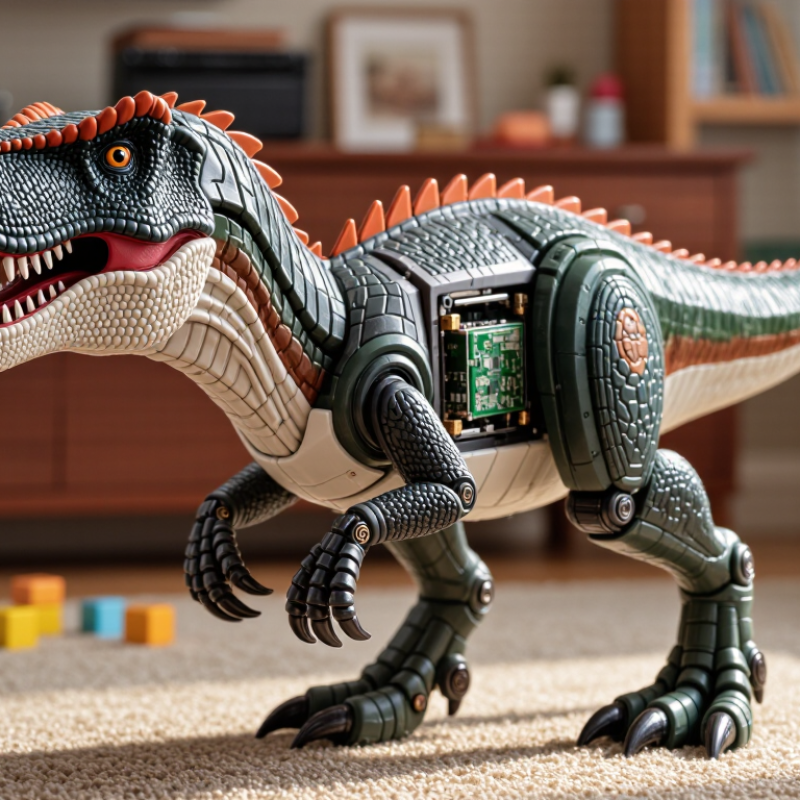
2026 Best High Quality Electronic Dino Supplier?
Electronic dinosaurs generally fall into three types: poseable figures with sound, walking or roaring models, and sensor-led toys that react to touch or movement. Circana’s 2024 global toy-market tracking reported a 1% sales-value increase across its measured markets. This broad result does not measure dinosaur toys alone, but it signals a competitive market where clear features matter. Compare movement quality, sound controls, battery access, and how easily a child can operate the toy.
Age grades should match the toy’s controls, size, and play demands—not just its appearance. Younger children usually need larger parts, simple buttons, and no small detachable accessories. Older children may enjoy multiple movement modes, sound effects, or basic interactive responses. Check age guidance and applicable toy-safety standards, including ASTM F963 in the United States. A convincing roar is not automatically a better feature; volume control and sturdy joints matter too. I would still test the toy in person when possible, because product descriptions can make ordinary movement sound more impressive than it is.
Tip: Ask suppliers for age-grade documentation, material details, battery-compartment design, and video showing repeated play. Check whether sensors respond reliably at close range. A brief demo is useful, but durability needs longer testing.
2026 Best High Quality Electronic Dino Supplier?
Check ASTM F963 Compliance and CPSIA’s 100 ppm Lead Limit
For an electronic dinosaur toy, a supplier’s safety documents matter as much as its lights and sounds. Ask for a current test report covering the exact model, materials, colors, and components you plan to order. ASTM F963 addresses toy hazards such as mechanical risks, flammability, and use-related safety. A report for a similar-looking toy is not enough.
The CPSIA sets a 100 ppm total lead limit for accessible components in children’s products; lead in surface coatings is limited to 90 ppm. Check that test results identify the tested parts, not just the finished toy. Small detail. Big difference.
The U.S. Consumer Product Safety Commission’s 2023 Toy-Related Deaths and Injuries report estimated 145,500 toy-related emergency department visits for children aged 12 and younger in 2022. That figure cannot predict a specific toy’s risk, but it shows why careful checks matter.
Request the laboratory’s report, test date, sample photos, and applicable ASTM F963 results. Match the report to the production version, including battery compartment and painted details. I would not treat a neat certificate as the whole story: a supplier can change a material after testing, and paperwork may lag behind. Ask how production batches are monitored, then verify key documents independently.
A 2026 electronic dinosaur should be checked beyond its lights, sound, and molded details. Ask the supplier for batch-specific laboratory reports covering the actual materials used. EN 71-3 assesses migration of 19 elements from toy materials; it does not test phthalates. These are separate checks. A clean-looking shell proves little.
For restricted phthalates, request results for DEHP, DBP, BBP, and DIBP in accessible plasticised parts, such as a soft tail, jaw, or cable coating. The EU REACH restriction sets a 0.1% by-weight limit, individually or combined, in covered plasticised materials. That equals 1,000 mg/kg. Ask whether the report identifies each material, test method, detection limit, and sample batch—not just the finished toy’s model name.
There is a reason to check the paperwork carefully. The European Commission’s 2023 Safety Gate annual report recorded 3,412 product alerts, showing how frequently product risks reach market surveillance. That figure is not a phthalate failure rate, but it underlines why supplier claims need evidence. Request the full signed report and confirm that EN 71-3 migration testing and phthalate analysis are both included. Reports can age quickly when plastic formulations change. A small detail, perhaps, but an important one.
| Verification area | What to verify | Requirement or interpretation | Useful evidence to request |
|---|---|---|---|
| EN 71-3: migration of certain elements | Test results for relevant accessible toy materials, such as coatings, plastics, and other material categories in the product. | EN 71-3 assesses migration of specified elements. Applicable limits depend on the element and material category; it is not a single universal pass value. | A laboratory report identifying the tested sample, material/category, test method, results, and applicable limits. |
| Restricted phthalates | Check plasticised materials in toys and childcare articles for DEHP, DBP, BBP, and DIBP. | Under EU REACH Annex XVII, the combined concentration of these four phthalates is restricted at 0.1% by weight (1,000 mg/kg) of the plasticised material, subject to the entry’s scope and exemptions. | A phthalate-specific chemical test report stating the tested material, analytes, results, and units. Do not treat an EN 71-3 report as phthalate evidence. |
| Sample and product match | Confirm that the report covers the offered dinosaur toy and the same materials, colours, coatings, and components. | A report for a different model or material may not demonstrate compliance for the product being purchased. | Sample description, photographs or model references, material list, and confirmation of any changes since testing. |
| Electronic-toy safety | Check that electrical features, batteries, wiring, and moving parts are covered by applicable toy-safety assessments. | EN 71-3 addresses chemical migration of certain elements; it does not by itself assess electrical or mechanical safety. | Relevant test documentation for the product’s electrical and mechanical features, in addition to chemical reports. |
| Laboratory and report quality | Review the testing laboratory, report date, method, sample identification, and result detail. | The report should be traceable and sufficiently detailed to evaluate the specific product and applicable requirements. | Complete reports rather than certificates or summary statements alone; verify laboratory accreditation and its relevant test scope where applicable. |
| Supplier change control | Ask how changes to plastic, paint, soft parts, suppliers, or production sites are controlled. | A change in material or construction can affect whether existing test evidence remains representative. | Written change-notification procedures and a commitment to reassess or retest affected materials when needed. |
Note: This table is a purchasing verification guide, not a product-specific compliance determination. Confirm the current legal requirements and their scope for the destination market and product.
Assess Battery Safety, Supplier Traceability, and Pre-Shipment Tests
A realistic electronic dinosaur needs more than convincing movement and sound. Its battery compartment, wiring, and charging behavior deserve close attention. IEC 62115:2017 sets safety requirements for electric toys, including electrical and thermal hazards. Ask suppliers for test reports tied to the exact model and battery configuration, not a similar product. Check for secure battery covers, clear polarity marks, and protection against overheating during charging. Small details matter.
Traceability helps connect a finished toy to its components and production history. Request lot codes for batteries, supplier records, production dates, and documented changes to the bill of materials. A missing record is worth investigating. CPSC’s 2023 Toy-Related Deaths and Injuries report estimated 231,700 toy-related injuries treated in U.S. emergency departments that year. That figure covers many toy types; it is not a battery-specific measure, but it underlines why routine checks matter.
Before shipment, use a written sampling plan and record results for the actual production batch. Tests can include charging, sound and motion functions, temperature checks, and inspection after drops. Ask whether the testing laboratory is accredited for the relevant work under ISO/IEC 17025. Keep dated photos and signed pass-or-fail records. I would not treat one passing sample as a guarantee; sampling has blind spots. A supplier willing to explain failures and corrective actions offers more useful evidence than polished paperwork alone.
Choosing a high-quality electronic dinosaur supplier in 2026 means checking more than a sample’s appearance. Ask for monthly output by model, not factory-wide capacity. A workshop may produce thousands of toys but only a few hundred of your chosen sound-and-motion model. Request recent batch records, motor testing criteria, and photos of assembly stations. Details matter.
MOQ affects how much cash sits in inventory. A lower MOQ may mean a higher unit price, while a large order can leave you with slow-moving colors or packaging. Request quotes at several quantities. Confirm whether cartons, custom inserts, batteries, and sample fees are included. Compare total landed cost, not just the quoted unit price.
Split lead time into sample approval, component sourcing, production, and inspection. Ask for each stage in writing, including components with long replenishment cycles, such as molded shells or sound modules. Allow time for one correction round; samples rarely match production perfectly. That happens. Check freight terms and payment milestones, since a short factory schedule can still lead to costly delays. Record the quote’s assumptions. Some estimates will change.
Compare production capacity, MOQ, lead time, and total cost using verified supplier quotes.
No verifiable supplier quotations were provided, so each core metric is marked as one missing input. This data-completeness check does not rank supplier performance; compare suppliers only after confirming their figures and quote terms.
